

An AI mobile app development company for iPhone and Android, from one codebase.
Voice notes, camera, documents and offline use, with AI that drafts and checks while a person stays in charge. For teams that work on their phones: a US$1,800 discovery sprint puts a prototype on a phone, a pilot starts from US$2,400, and version 1 reaches both stores in 2 to 3 phases from US$7,200 each.
Not the right team for games or apps built around heavy 3D graphics. If your users work at a desk, see AI web apps.
- Pilot
- From US$2,400
- Both stores
- From US$7,200 a phase
- Built with
- Expo · Capacitor
Pressure 8.6 bar is above the 8.0 limit on the test sheet. Crew note: gauge re-read twice.
An app for people who aren't at a desk.
What is AI mobile app development?
Building iPhone and Android apps with AI features inside: voice notes that become drafted records, camera reading of forms and labels, checks as you go, and drafts a person signs. One codebase serves both stores, and records are saved on the phone when there is no signal.
- No signal on site
- Checklists, photos and signatures saved on the phone without signal, and synced when it reconnects.
- Paperwork after the job
- A crew member speaks after the job, and the app drafts the job sheet or invoice for them to check.
- Notes typed up later
- A visit note drafted while the clinician talks, reviewed and signed before it is saved.
- Sign-off back at the office
- Supervisors approve records on site, with a trail of who signed what and when.
- Forms retyped from photos
- Photos of forms and labels read into fields, with anything uncertain sent to a person.
- Two apps to keep up
- iPhone and Android from one codebase, or your web app shipped to both stores from the same code.
Six mobile apps we know how to ship.
What AI mobile apps does NorthStar build?
Six kinds: offline field apps, voice notes into records, clinical apps, sign-off on the phone, camera and document capture, and a companion to your web app. Each links to a use case or a client build, with how it works, a price range and a timeline.
Offline field apps
Checklists, photos and signatures saved on the phone without signal, and synced when it reconnects.
Use case: offline field inspection app →Voice notes into records
A crew member speaks after the job, and the app drafts the job sheet or invoice for them to check.
Use case: document extraction →Clinical apps
A visit note drafted while the clinician talks, reviewed and signed before it is saved.
Use case: AI scribe →Sign-off on the phone
Supervisors approve records on site, with a trail of who signed what and when.
Proof: completions tracking →Camera and document capture
Photos of forms and labels read into fields, with anything uncertain sent to a person.
Demo: document extraction →A companion to your web app
Your web app on iPhone and Android from the same code, as we did for Parallel Completions.
Proof: Parallel Completions →A mobile app, one priced step at a time.
How does an AI mobile app build run, week by week?
A free 30-minute scoping call, then a US$1,800 discovery sprint over 1 to 2 weeks, with a clickable prototype you can open on a phone. A pilot takes 4 to 6 weeks, and version 1 reaches both stores in 2 to 3 phases of 5 to 6 weeks. You can stop after any step.
Scoping call
30 minutes on the problem, the users and where they work.
- Time
- 30 minutes
- Price
- Free
- Ends with
- A written next step
Discovery sprint
The AI blueprint: requirements, a clickable prototype you can open on a phone, the architecture and a fixed estimate.
- Time
- 1 to 2 weeks
- Price
- US$1,800 fixed
- Ends with
- A plan you own, whoever builds it
Pilot
A prototype with one AI feature on your own data, tested by a small group of users on their phones.
- Time
- 4 to 6 weeks
- Price
- From US$2,400
- Ends with
- A go or stop on version 1
Version 1
The app released to iPhone and Android through the App Store and Google Play, in 2 to 3 phases.
- Time
- 5 to 6 weeks a phase
- Price
- From US$7,200 a phase
- Ends with
- A live app in both stores
Run and grow
App updates, store releases, fixes, and security and model updates.
- Time
- Monthly
- Price
- Squad, US$9,599 a month
- Ends with
- A report every month
In US dollars · every package below
Apps built for the phone.
Which mobile apps has NorthStar built?
Parallel Completions' field teams work on iPhone and Android, and Tibra Health's clinical app is on its way to the stores.
- 01Blueprint
- 02Build
- 03Live
- 01Blueprint
- 02Build
- 03Live
Illustrations of the two builds · sample data
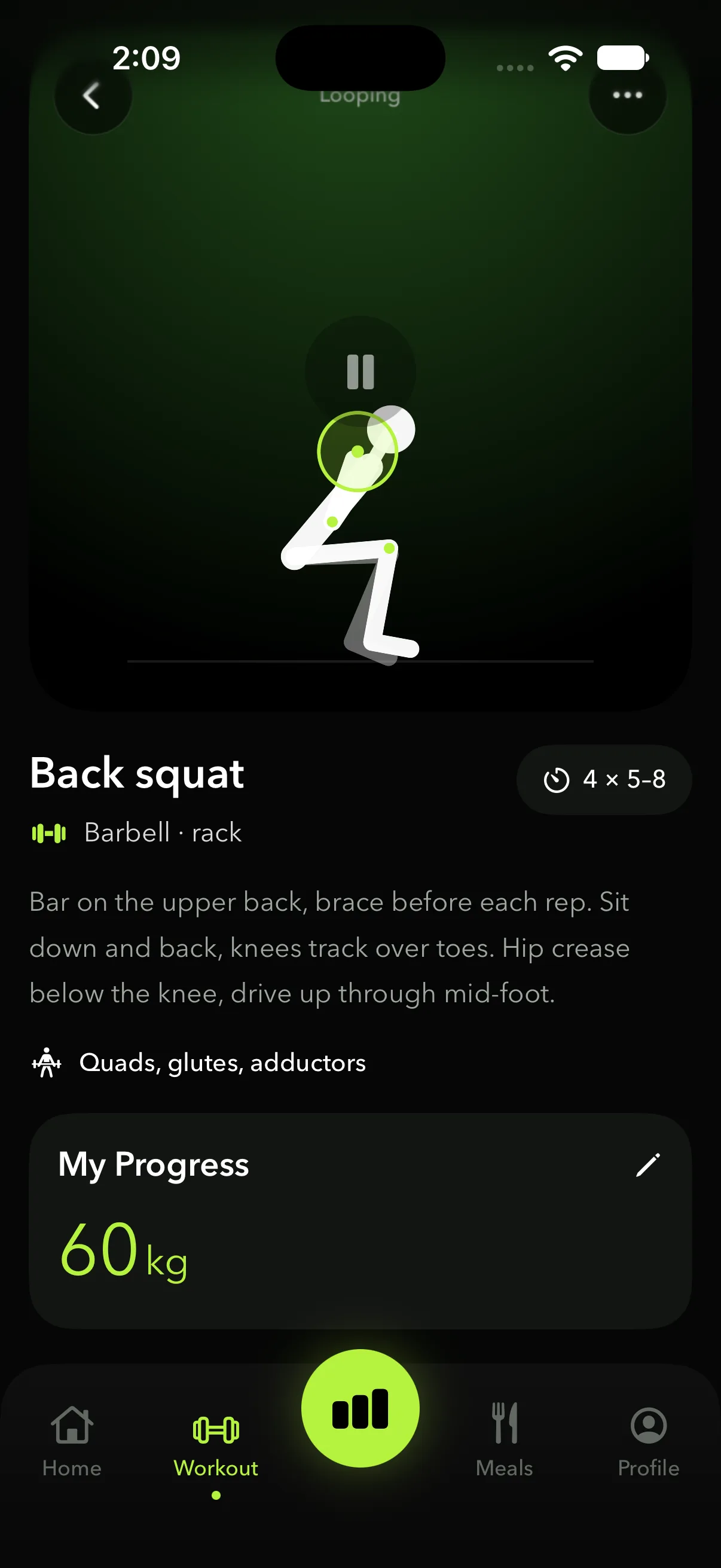
Recomp, a native iPhone app where the device demands it.
Diet, sleep, activity and training for one plan, in native SwiftUI. Apple Health is read-only, every record stays on the phone, and all 46 exercises have a form animation drawn in code.
See the app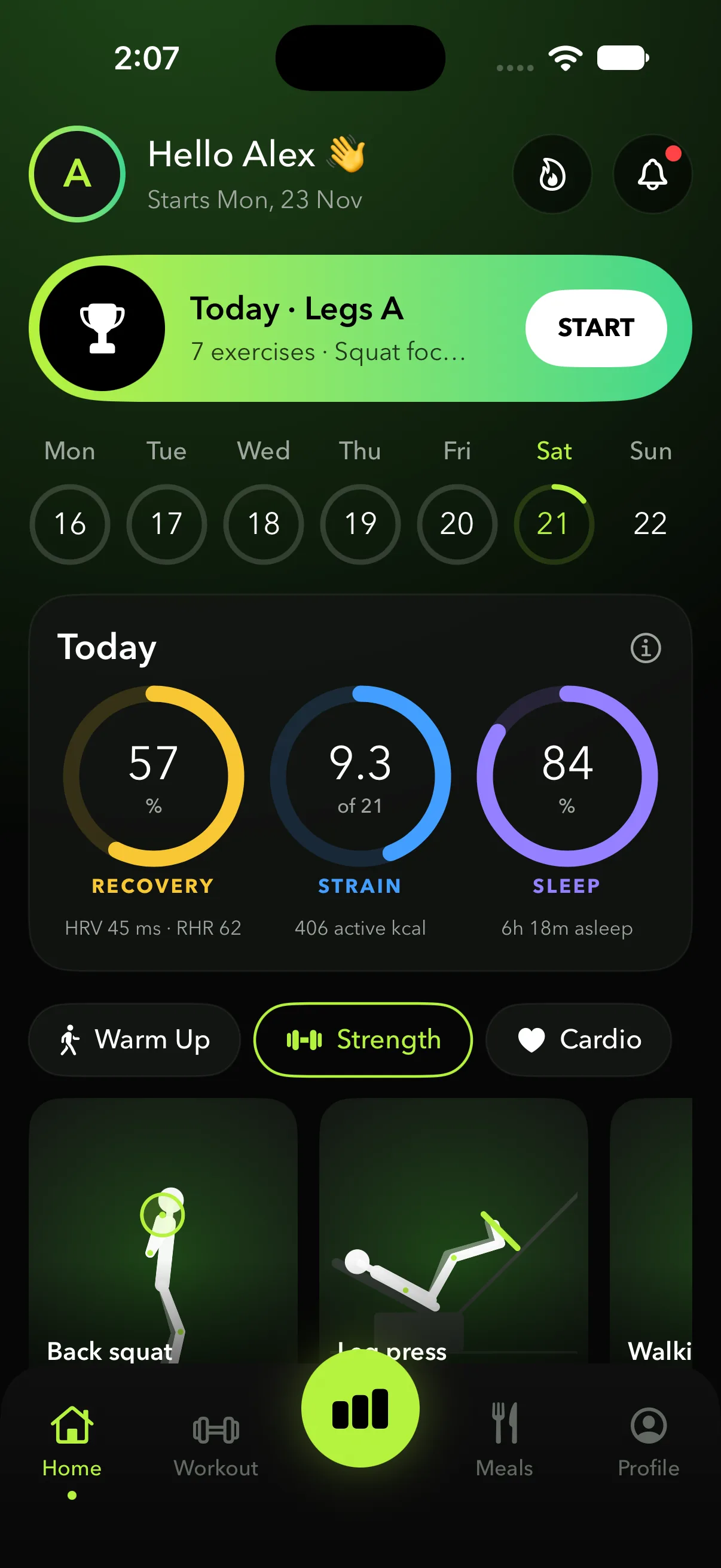
Boring choices, on purpose.
What tech stack does NorthStar use for mobile apps?
Expo and React Native for a new app, with one codebase for iPhone and Android. Capacitor when a web app already exists, as it did for Parallel Completions. Swift or Kotlin only where the device demands it, such as a custom camera or background work.
Expo and React Native
For a new app: one codebase for iPhone and Android, with small fixes shipped without waiting for a store review.
Some device features need a native module.
Capacitor
When a web app already exists, the same code ships to both stores as a companion app, as it did for Parallel Completions.
Heavy camera or offline work may need native code.
Native code where the device demands it
Swift or Kotlin only for the parts that need it, such as a custom camera or background work.
A second skill set to keep up.
Saved on the phone, then synced
Records, photos and signatures are kept on the phone first and synced when the signal comes back.
Clashing edits need clear rules, agreed up front.
A main model and a backup
Each feature uses the model that does its job best, and the app says when the backup answered.
Two providers to watch for price and policy changes.
Your store accounts
The App Store and Google Play listings sit in your name from the first release.
Apple's yearly developer fee and each store review are yours to keep up.
Where the AI goes in a mobile app.
Where does AI fit in a mobile app?
Where a person on the move loses the most time: voice notes that become a drafted record, camera reading of forms and labels, checks as you go, search with sources, and drafts a person signs. Each links to a use case you can price.
Voice
Speak after the job and get a drafted record, invoice or note to check.
Document extraction →Camera reading
Photos of forms and labels become fields, with doubtful ones sent to a person.
Try the demo →Checks as you go
Missing photos, out-of-range readings and skipped steps flagged before the crew leaves site.
Field inspections →Search with sources
Ask a question on site and get the answer with the document it came from.
Company search →Drafts a person signs
A visit note or report drafted on the phone, never saved until it is reviewed.
AI scribe →Safe on the phone, in your region on the server.
How is data kept safe in an AI mobile app?
Records stay on the phone only until they sync, behind the app's sign-in, and live in the region your rules require. Recording starts only after the person agrees, and every approval records who signed what and when.
- On the phone
- Records stay on the phone only until they sync, behind the app's sign-in.
- Where it lives
- In the region your rules require. The clinical platform we run keeps its data in the EU.
- Consent
- Recording starts only after the person agrees, with the consent saved to the record.
- Sign-offs
- Every approval records who signed what and when, on the phone and the web.
- Reviews done
- An ISO 27001 and GDPR review for Parallel Completions, and a security brief for Tibra Health's clinical AI app.
A fixed price for each phase.
How much does AI mobile app development cost?
A US$1,800 discovery sprint first. A pilot with one AI feature starts from US$2,400, version 1 for iPhone and Android takes 2 to 3 phases from US$7,200 each, and releases after launch run on a Squad at US$9,599 a month.
The AI blueprint: requirements, a clickable prototype you can open on a phone, the architecture and a fixed estimate, in 1 to 2 weeks.
Pilot
FromUS$2,400once
A prototype with one AI feature, on your own data, tested by a small group of users on their phones.
- Time
- 4 to 6 weeks
- Ends with
- A go or stop on version 1
MVP
FromUS$7,200a phase
iOS and Android version 1 in 2 to 3 phases, released through the App Store and Google Play.
- Time
- 5 to 6 weeks a phase
- Who you get
- A dedicated AI engineer with a lead reviewing, plus a shared designer, tester and project manager
- Ends with
- A live app in both stores
Squad
US$9,599a month
Releases after launch: features, fixes, store releases, and security and model updates.
- Capacity
- About 320 hours a month
- Who you get
- Two engineers with a lead reviewing, plus a shared designer, tester and project manager
- Calls
- Weekly
A fixed quote after one 30-minute call. Need something else? See every way to work with us.
- Pilot and MVP phases are fixed prices, set in the discovery sprint before the build starts.
- Squad is month to month. Paying a quarter ahead takes 10% off, and you can change package in any month.
- App store fees, AI model and hosting costs are paid at cost, straight to the provider, never marked up.
US dollars · prices as of 21 Nov 2026 · no hourly rates
Should an AI mobile app be built in-house or by a company like NorthStar?
In-house makes sense once the app is your core product and you can hire mobile and AI engineers. Until then, a team that ships both stores from one codebase, tests the AI on real questions and leaves the store accounts in your name gets you to version 1 sooner.
| Question | NorthStar | In-house team | Freelancer | Typical agency |
|---|---|---|---|---|
| iPhone and Android | One codebase for both stores | Often two hires, one per platform | Usually one platform | Often two separate apps |
| AI tested before release | Real questions run before every release, with a backup model | Depends on who you hire | Often skipped | Varies by team |
| Price known up front | A fixed price for each phase | Salaries, tools and hiring costs | Hourly, and grows with changes | Often hourly or one large bid |
| Store accounts and code | In your name from the first release | Yours | Sometimes in their account | Depends on the contract |
| After launch | Store releases and model updates on a monthly team | Your team | Often nobody | A separate support contract |
What people ask first.
Short answers here. The scoping call gets you the long ones for your app.
How much does an AI mobile app cost?
A US$1,800 discovery sprint first. A pilot of one AI feature starts from US$2,400, and version 1 in both stores takes 2 to 3 phases from US$7,200 each. The discovery sprint ends with a fixed quote, so you know the full price before the build starts.
iPhone, Android or both?
Usually both, from one codebase. If your users are all on one platform, we can start there and add the other later from the same code.
Does it work without signal?
Yes, when it needs to. Forms and files are saved on the phone before the crew goes out, and records sync when signal returns. Simple checks run on the phone, fuller ones when the record syncs.
Who puts it in the stores?
We handle the submissions and store reviews, from store accounts in your name, so the listings stay yours.
We already have a web app. Do we start again?
No. With Capacitor the same code becomes the phone app, as it did for Parallel Completions.
What happens after launch?
Releases after launch run on a Squad at US$9,599 a month: features, fixes, store releases, security and model updates. You get a report every month.
Can you get the app its first users?
Yes. Our Grow team runs app install campaigns on Meta, Google and other channels, judged on cost per install and revenue: see performance marketing.
Get this scopedin 30 minutes.
Bring the problem and, if you have them, the forms or screens your team uses today. You leave with a written next step and a price range.
Your time zone · you confirm on the next step