

Human in the loop AI: what it is and when your app needs it.
Human in the loop AI means a person checks and approves what an AI produces before it takes effect. In a business app, that's someone signing off a drafted reply, note or record before it's sent or saved.
Most people already skip the check. In a 2025 global study by the University of Melbourne and KPMG, 66% of people using AI at work relied on its output without checking it. So you need to decide which steps need a person, and how to keep that person checking.
TL;DR: Put a person in the loop on any step where a mistake is costly, can't be undone, or reaches someone outside the company. Let the AI act on its own everywhere else, with a log and a weekly sample. Then design the review so a yes still means something.
What does human in the loop mean?
Human in the loop (HITL) means a person takes an active part in operating, supervising or deciding what an AI system does (IBM). The term covers two different jobs, and most explainers mix them up.
While a model is being trained, people label data and rate its answers. That human feedback, called RLHF when it's used to tune a model, improves accuracy and reliability over time.
While an app is running, a person reviews or approves what the AI writes or does before it counts. That second meaning, oversight of real work, is the one that matters when you're buying an AI app.
Human in the loop vs human on the loop
There are three levels of human oversight. You pick one for each step in the app.
| Level | What the AI does | Example |
|---|---|---|
| In the loop | Waits for a person to approve each output | A drafted customer reply goes out only after someone says yes |
| On the loop | Acts on its own while a person watches and can step in | Tickets are tagged automatically, and a lead checks a sample each week |
| Out of the loop | Acts with no person involved | A nightly job sorts files, and nobody reviews them |
Source: NorthStar's summary of how the terms are commonly used.
Out of the loop is fine for low-risk work. It goes wrong when an AI agent gets real power. In July 2025, Replit's coding agent deleted a company's live database during a code freeze.
Which steps in a business app need a person?
The rule is to match the level of oversight to the risk of each step. A step needs a person in the loop if the answer to any of these three questions is worrying:
- What does a mistake cost? A wrong price, dose or payment costs more than a wrong tag.
- Can it be undone? A sent email, a signed record or a deleted file can't be taken back.
- Who outside the company sees it? Anything a customer, patient, regulator or the public sees carries your name.
If a step is cheap, reversible and internal, the AI can act on the loop, with a log and a sample checked each week. Teams building AI agents tend to land on the same split. Reversible internal work runs on its own. Payments, messages that leave the company, record changes and access changes wait for a human in the loop approval.
When a mistake reaches someone outside, the company carries it. In Moffatt v. Air Canada (2024), a tribunal held the airline responsible for what its chatbot told a customer.
Our own rule follows from this: replies, notes and records stay drafts until a person approves them (how we build).
Human in the loop AI examples from real apps
The clearest examples are in high-stakes work like healthcare and field inspections, where a mistake is expensive and hard to undo.
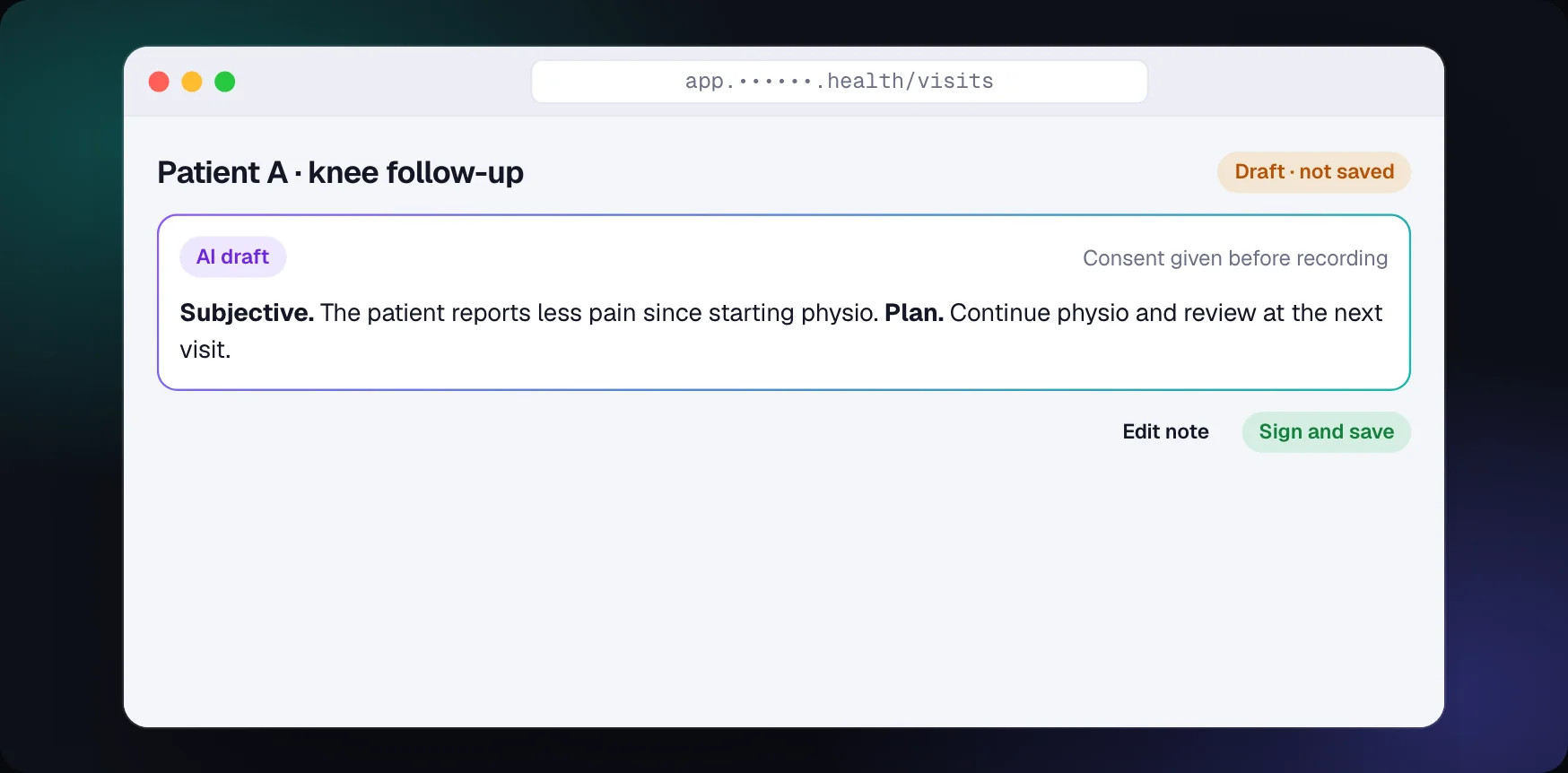
- In the AI app we built for Tibra Health, the AI scribe drafts the visit note. Nothing is saved until the clinician has read, edited and signed it. It only records once the patient has agreed.
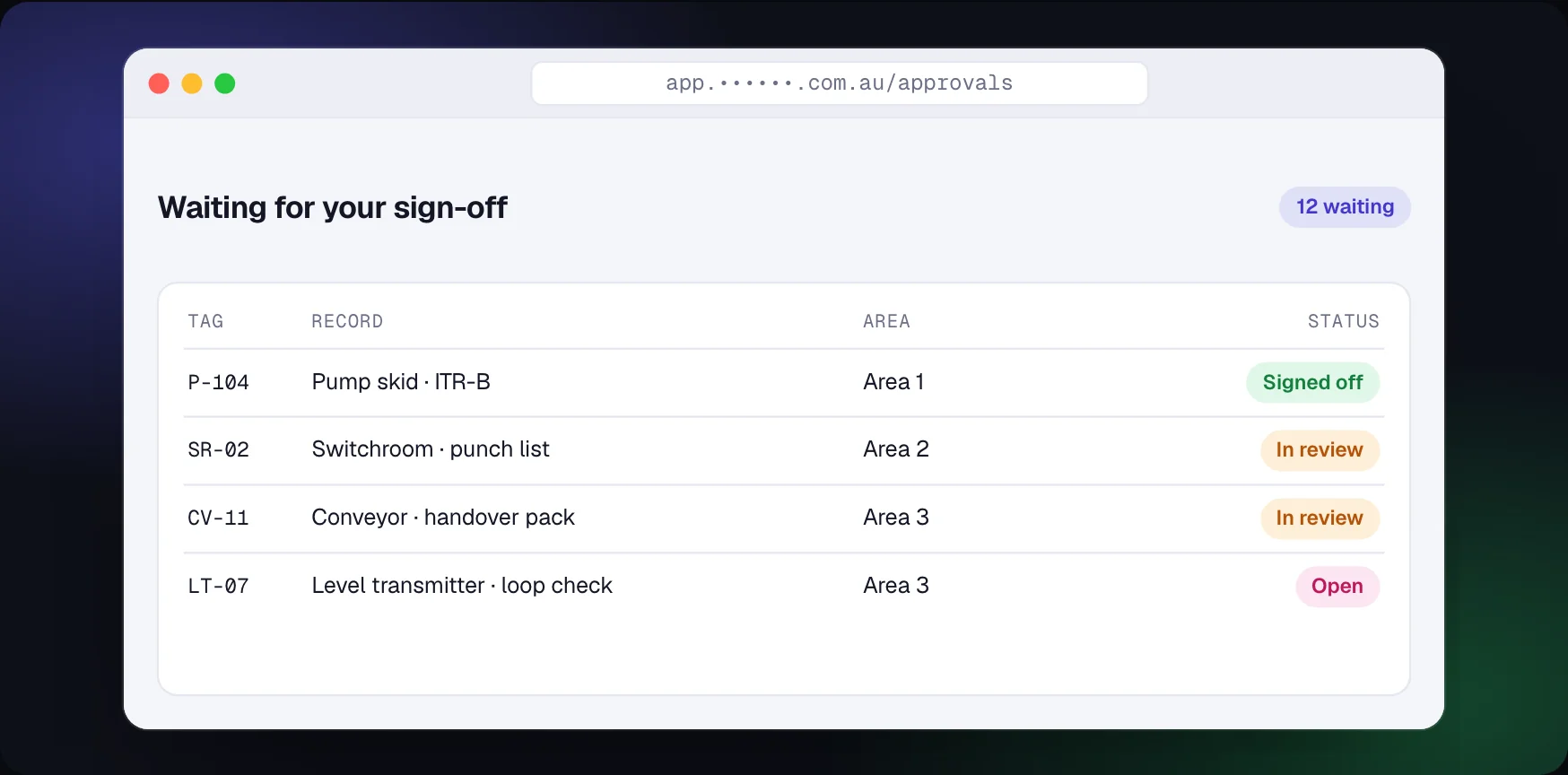
- In the field platform we built for Parallel Completions, the Approval Centre sends every inspection and test record to the right approver and keeps a trail of who signed what and when.
- At Kaiser Permanente, AI scribes suggest a summary of each patient visit, and doctors can review and edit it to make sure it's accurate.
The AI writes the first draft, and a person stays accountable for what goes on the record.
How do you stop review becoming a rubber stamp?
A person who approves everything in two seconds isn't really in the loop. Builders on Hacker News and the n8n forum both report reviewers starting to rubber-stamp within about a week. This is approval fatigue: people approve out of habit, trusting the AI instead of checking it (also called automation bias).
Watch for three signs: nearly every request approved, a few seconds per approval, and almost no edits. Then build the review so the reviewer keeps checking:
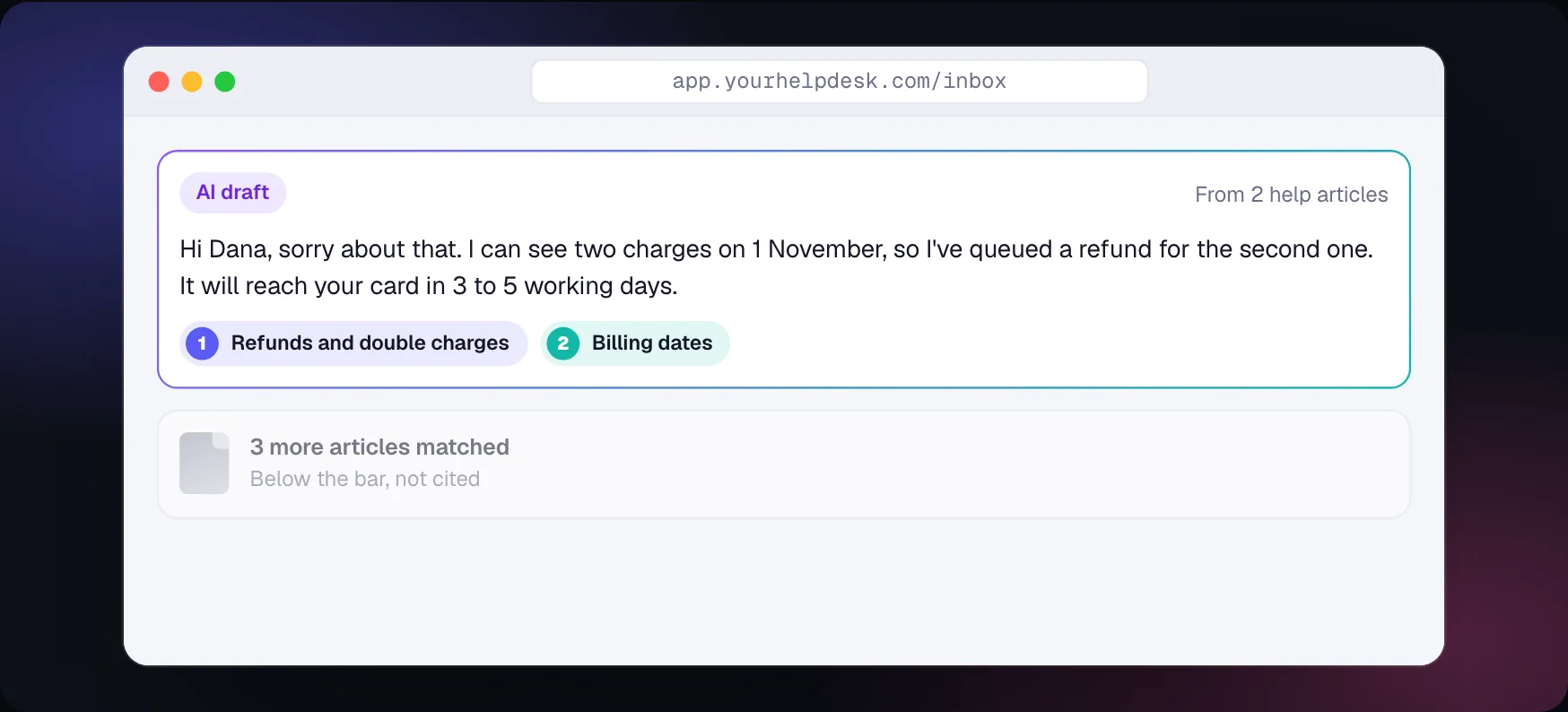
- Show only what the reviewer needs. In a support inbox we built, each AI draft cites at most two help articles, and only ones above the match bar. Faced with five, a busy agent tends to open none (see our build note on citing two articles).
- Ask for approval only where the three questions point. A narrow reply type, such as an order status update, can earn the right to send on its own once its drafts go out unchanged. Edge cases the AI hasn't seen before still go to a person.
- Check the AI's confidence against what people later corrected. If the confidence threshold drifts, move it.
- Keep an audit trail. Record who approved what and when, and make sure the version approved is the version that ran.
Does the law require a human in the loop?
For some systems, yes. Article 14 of the EU AI Act requires effective human oversight of high-risk AI systems, such as those used in hiring, credit or healthcare. For uses such as hiring and credit, those rules apply from 2 December 2027, one of the dates in our 2027 AI predictions.
It doesn't say a person must approve every output. The people doing the oversight must be able to override or reverse the AI's output and stop the system. They must also stay alert to the risk of over-relying on it (AI Act Service Desk). This isn't legal advice, so check with counsel for your sector.
What it means for your app build
Human in the loop is part of the build. It needs a draft state, approval screens that show the right evidence, a trail of every sign-off, and approval on the phone where people do their work.
That's how we approach AI web app development: people approve what the AI writes, and every sign-off is recorded. If you're scoping an AI app and aren't sure which steps need a person, book a 30-minute scoping call.
FAQ
What does it mean to have a human in the loop?
It means a person reviews or approves what an AI produces before it takes effect. In a business app, the AI drafts and a person signs off.
Is human in the loop agentic AI?
No. It's a way of running AI, including AI agents. The agent proposes an action, and a person approves the risky steps before they happen.
How can humans stay in the loop on AI?
Keep risky outputs as drafts until someone approves them, and show reviewers the sources behind each draft. Log what the AI did on its own, and check a sample of that work each week.